
We are dedicated to
serving
the poor, the forgotten and the unloved.


Important Message(s)
30th Sunday of Ordinary Time

This week’s Gospel follows close behind the Gospel read last Sunday. It is the last of three questions put to Jesus by Jewish religious leaders who are trying to trick him into saying something that might get him arrested. This reminds us that the context for today’s reading is the mounting tension between Jesus and the religious leaders in Jerusalem.
The Herodians and the Pharisees asked the first question, which was about taxes. The Sadducees asked the second question, which was about the Resurrection (see Matthew 22:22-33). The third question, considered in today’s Gospel, is asked by a Pharisee who asks Jesus about the greatest of the commandments.
The question requires Jesus to interpret the Law of Moses. The Mosaic Law consists of the Ten Commandments and many additional rules, numbering over six hundred. Adherence to the Mosaic Law, for a devout Jew, is an expression of faithfulness to God’s covenant with Israel. The ranking of the Commandments was regularly debated among the teachers of the Law.
Jesus answers the Pharisees’ question with a two-fold summary. Jesus says that all of the commandments can be summarized in two commandments: love God and love your neighbor. Both of these were central elements of the religious tradition Jesus learned from his Jewish community. Indeed these continue to be central aspects of contemporary Jewish religious understanding. Jesus’ response to his questioners proposed an integral connection between these two aspects of the Jewish Law. Love of God finds its expression in our love for our neighbor.
Diocesan Support Appeal 2026
Vincentian Family News
- Beyond Emergency Aid: A Vincentian Call for Systemic Change

Food, clothing, medical attention, and emergency shelter save lives, especially during war. But Ukraine cannot overcome homelessness through crisis assistance alone. The study calls for reliable […]
- The Vincentian Family Daily Intention: October 25, 2026

Today, October 25, 2026, we, the members of the Vincentian Family, pray for unemployed workers who feel their dignity slipping away.
- From the Street to the Warmth of Home: The Brothers of Charity’s Mission in Nicaragua

In Granada, Nicaragua, the Brothers of Charity developed Casa Amanecer and Centro Jesús Amigo to accompany children and young people affected by poverty, family instability, street life, and […]
- Beyond the Headlines: When Climate Change Becomes Hunger

A strong El Niño could push millions more people into acute food insecurity, especially in already vulnerable regions. This reflection looks beyond climate forecasts to the farmers, families, and […]
- The Vincentian Family Daily Intention: October 24, 2026

Today, October 24, 2026, we, the members of the Vincentian Family, pray for migrants who find themselves stuck in legal limbo for years.
- On October 24 We Celebrate the Feast of St. Luigi Guanella

The spirituality of Louis Guanella can be understood as a unique confluence of the spirituality of the "saints of charity" such as St. Francis of Assisi, St. Vincent de Paul, St. Joseph Cottolengo, […]
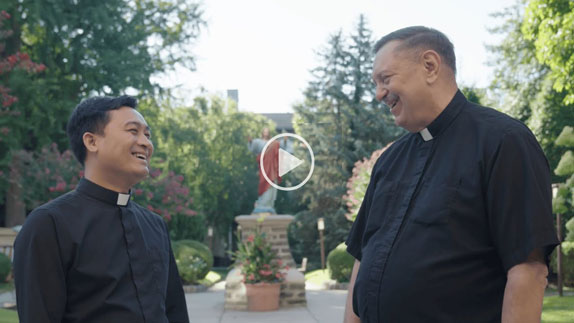
Saint Mary’s History (filmed in 2018)

400 years living the spirit of St. Vincent de Paul
Contact Information
St. Mary’s Catholic Church
812 Duke Street
Greensboro, NC 27401
Hours
Monday through Friday
9:30 AM – 2:30 PM
Phone: 336-272-8650
Email: info@stmarysgreensboro.org


© Saint Mary's Catholic Church 2026